





























Which Ceanothus to plant according to your region?
Successfully planting a ceanothus by adapting the variety to the local climate
Contents
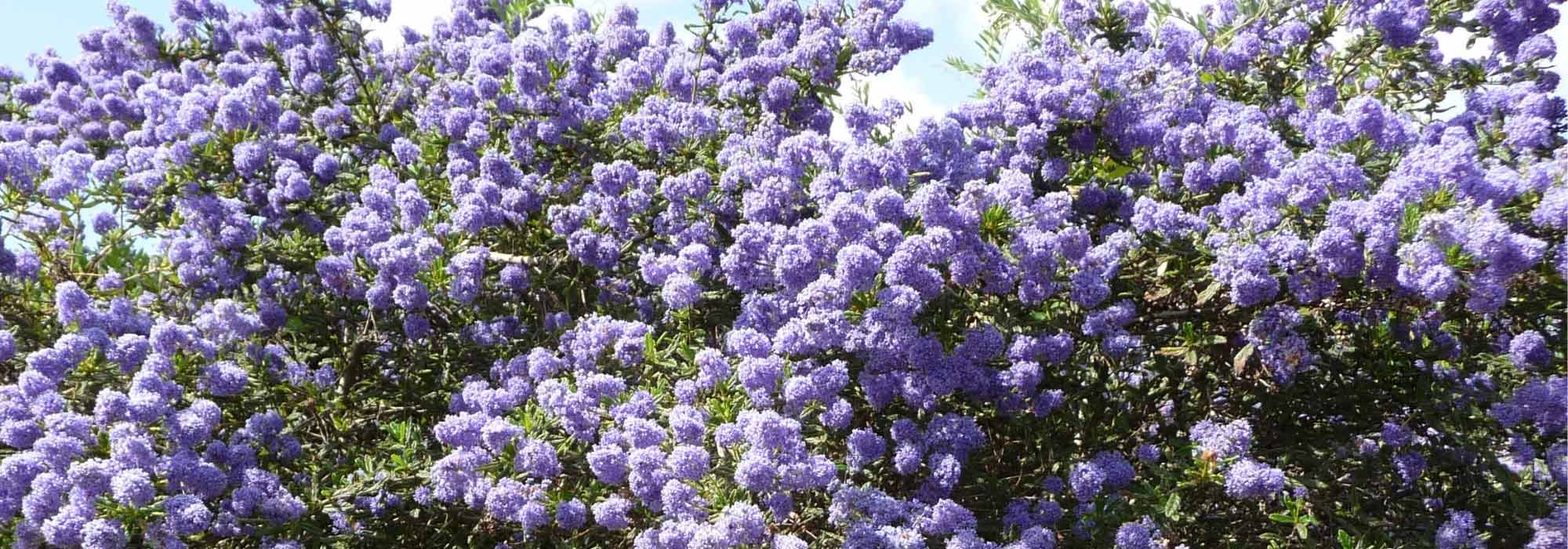
Originating from North America and Mexico, and growing in its natural habitat in chaparral zones, which is the American equivalent of scrub vegetation, Ceanothus is a dream come true with its profusion of azure or violet flowers literally covering its branches. But where should you plant a Ceanothus? Some are deciduous, others evergreen or semi-evergreen, shrubby or creeping… However, it is actually their hardiness that will primarily guide your choice for one or the other of the Ceanothus in your garden or on your terrace, as it is a plant that can be sensitive to cold.
Will you be able to grow a Ceanothus in the ground and integrate it into a beautiful flowering bed or a hedge, or only in a pot to protect it from the harshness of your winters? We offer a brief overview of the different varieties of these magnificent California Lilacs to successfully install depending on the region where you live.
→ To learn everything about Ceanothus, check out our complete guide: Ceanothus, California Lilac: planting, maintenance, pruning
→ Is this plant right for you? Plant wisely with our web application Plantfit, which will guide you in just a few clicks to the recommended plants for your garden.

You live in the Mediterranean region.
The Mediterranean fringe and the Corsican coastline enjoy warmth in summer and an exceptionally mild climate in winter, with temperatures rarely dipping to zero: growing conditions corresponding to USDA hardiness zone 10, ideal for all Ceanothus.
You are fortunate gardeners, as this region allows you to plant all the Ceanothus you desire directly in the ground without worry. However, keep in mind that some California Lilacs will tolerate drought less than others, while the Mediterranean climate is also characterised by dry spells. Ceanothus delilianus ‘Gloire de Versailles’, pallidus ‘Marie Simon’, and the Ceanothus ‘Skylark’ require fresh, well-drained, fertile soil.
Opt for other varieties that are well resistant to drought and the intense heat of the South, such as the groundcover Ceanothus griseus ‘Yankee Point’, the shrubby Ceanothus impressus ‘Puget Blue’, or the Ceanothus ‘El Dorado’ with its lovely variegated foliage. Like other drought-tolerant Ceanothus, they will adapt wonderfully to growing conditions similar to their native habitat.
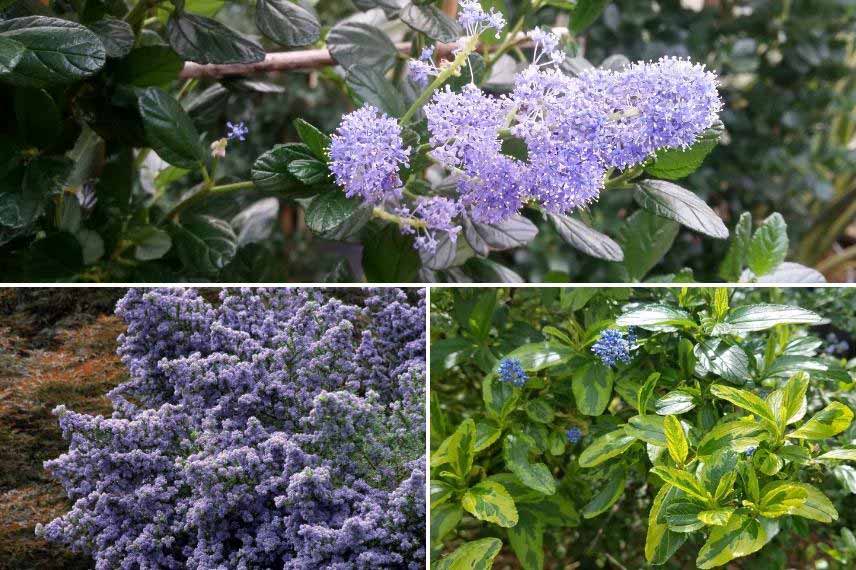
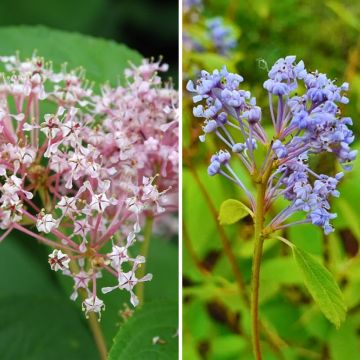
Ceanothus griseus ‘Yankee Point’, Ceanothus impressus ‘Puget Blue’, and Ceanothus thyrsiflorus ‘El Dorado’ (Photo Stephanie Falzone)
You live on the Atlantic fringe.
This coastal area running along the entire West coast, from the Normandy point to the southwestern tip of the Basque Country, is another particularly privileged geographical zone, benefiting from a micro-climate due to maritime influence and the Gulf Stream (warm ocean current). This area corresponds to USDA hardiness zone 9.
With mild temperatures year-round but cooler summers, and higher humidity, the gardens of the Atlantic fringe allow for the outdoor cultivation of many Ceanothus, especially since significant frosts are rare.
In addition to all the hardier varieties, they can host in full sun the more tender Ceanothus ‘Edinburgh’, a large variety (height of 3m and spread of 2.5m) with lilac-blue flowers, the Ceanothus ‘Burkwoodii’ which is distinguished by a long summer flowering period rare for Ceanothus, and the Ceanothus ‘Tuxedo’, a large evergreen bush with very decorative almost black-purple foliage.
Discover other Ceanothus
View all →
Available in 1 sizes

Available in 0 sizes
Available in 1 sizes

Available in 3 sizes
Available in 3 sizes
Available in 0 sizes

Available in 1 sizes
Available in 1 sizes
Available in 2 sizes

Available in 1 sizes
You live in a maritime climate region.
The oceanic climate characterises a large geographical area to the west of the country, extending to the centre. In this USDA climate zone 8, which excludes elevated areas, frosts can reach temperatures of -5 to -10°C. The planting of many Ceanothus is still possible in open ground provided they are given well-drained soil to avoid stagnant moisture and are exposed to sunlight.
You will have a choice of many varieties, hardy down to -10°C, classified here according to their growth to facilitate your selection:
- Groundcover Ceanothus: Ceanothus prostratus, Ceanothus griseus ‘Yankee Point’, Ceanothus (x) ‘Blue Mound’, Ceanothus thyrsiflorus ‘Repens’ and Ceanothus ‘Blue Sapphire’
- Medium-sized bushy Ceanothus (1.00m to 1.50m): Ceanothus ‘Italian Skies’, Ceanothus (x) ‘Blue Diamond’, Ceanothus ‘Henri Desfossé’, Ceanothus ‘Skylark’ and Ceanothus pallidus ‘Marie Blue’
- Large bushy Ceanothus (1.50m to 4.00m): Ceanothus impressus ‘Puget Blue’, Ceanothus impressus ‘Victoria’, Ceanothus pallidus ‘Marie Simon’ (in pink), Ceanothus arboreus ‘Concha’, Ceanothus arboreus ‘Trewithen Blue’, Ceanothus thyrsiflorus ‘Millerton Point’ (with white flowers), and Ceanothus ‘El Dorado’ and Ceanothus impressus ‘Lemon & Lime’ (the last two with variegated foliage)
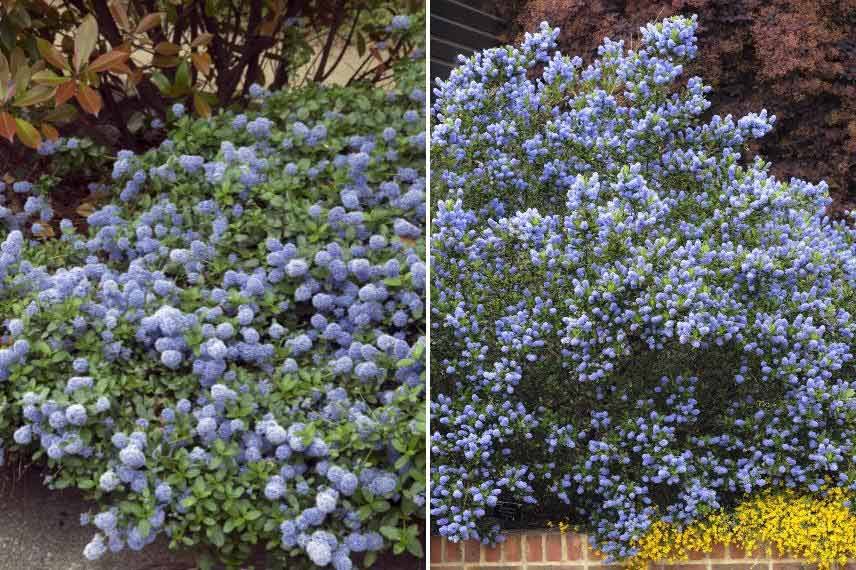
Ceanothus thyrsiflorus ‘Repens’ and Ceanothus ‘Skylark’
You live in a semi-continental climate region.
If you live in the East of France and in the plains around the mountain ranges, your garden is subject to a semi-continental climate. In this climate, where temperatures can drop to -15°C in winter, the varieties of Ceanothus will be fewer for open ground.
However, you can still plant the Ceanothus delilianus ‘Gloire de Versailles’, which is more cold-resistant than the Californian evergreen ceanothuses, but requires cool, well-drained, fertile soil, as well as the ceanothus pallidus ‘Marie Rose’ with its lovely soft pink flowers in June-July that repeat in September-October. The Ceanothus impressus ‘Cool Blue’, with its variegated evergreen foliage, is also one of the hardiest, able to withstand negative temperatures down to -15°C.
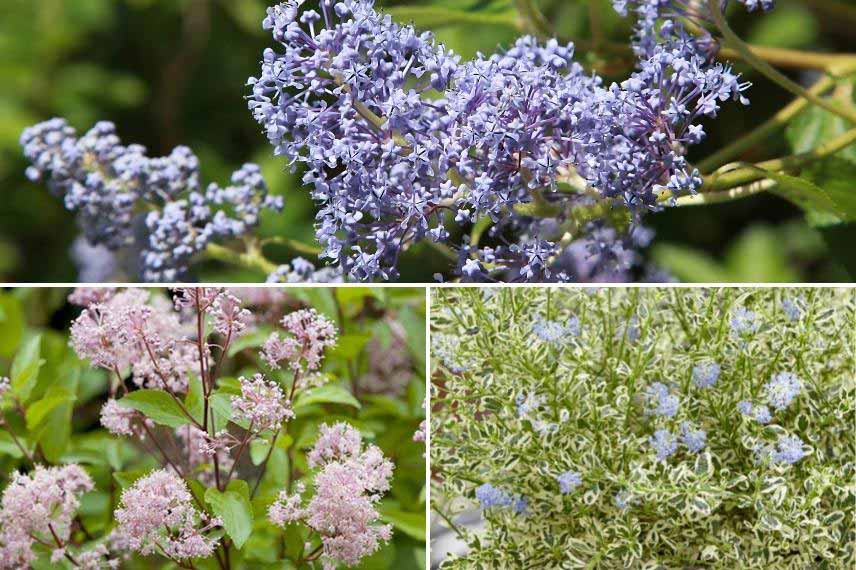
Ceanothus delilianus ‘Gloire de Versailles’, Ceanothus pallidus ‘Marie Rose’ and Ceanothus impressus ‘Cool Blue’
Everywhere else
In a continental climate and mountainous zone, corresponding to USDA climate zones 6, growing Ceanothus in the ground will be much more risky. However, you can grow it in a large pot, overwintering it and bringing it out to a sunny terrace around April-May when the intense cold is no longer a concern. Position it in a well-sunny spot, for example against a wall to shelter it from prevailing winds. To overwinter a Ceanothus, ensure you can bring it into a cold greenhouse or unheated conservatory as winter returns.
Opt for small-growing California Lilac varieties, such as Ceanothus ‘Blue Sapphire’, notable for its reasonable size suitable for pots and its long intense blue flowering from April to July, or Ceanothus ‘Blue Diamond’, evergreen and wonderfully flowering from May to late June.
Hardiness of Plants and Climate Zones
Would you like to learn more about the hardiness of plants and climate zones? Check out our dedicated sheets:

- Subscribe!
- Contents
Comments